Islamabad (Pakistan), 3-9 September 2026 – Pakistan is taking steps towards strengthening the measurement of violence against women and gender-related killings of women and girls through the implementation of the UNODC-UN Women “Statistical Framework for Measuring the Gender-Related Killing of Women and Girls (also known as femicide/feminicide)”. The initiative, supported by the Ministry of Human Rights, UNODC-KOSTAT Centre of Excellence for Statistics on Crime and Criminal Justice in Asia and the Pacific (CoE), UN Women Knowledge and Partnerships Centre in the Republic of Korea and UN Women Pakistan, brings together national institutions involved in producing and using data on homicide and violence against women.
The initiative responds to the need for more consistent and comparable information on gender-related killings. The Statistical Framework, jointly developed by UNODC and UN Women and endorsed by the UN Statistical Commission in 2022, provides countries with a common statistical approach to identifying and measuring gender-related killings and encourages the collection of information on the circumstances and context of each killing.
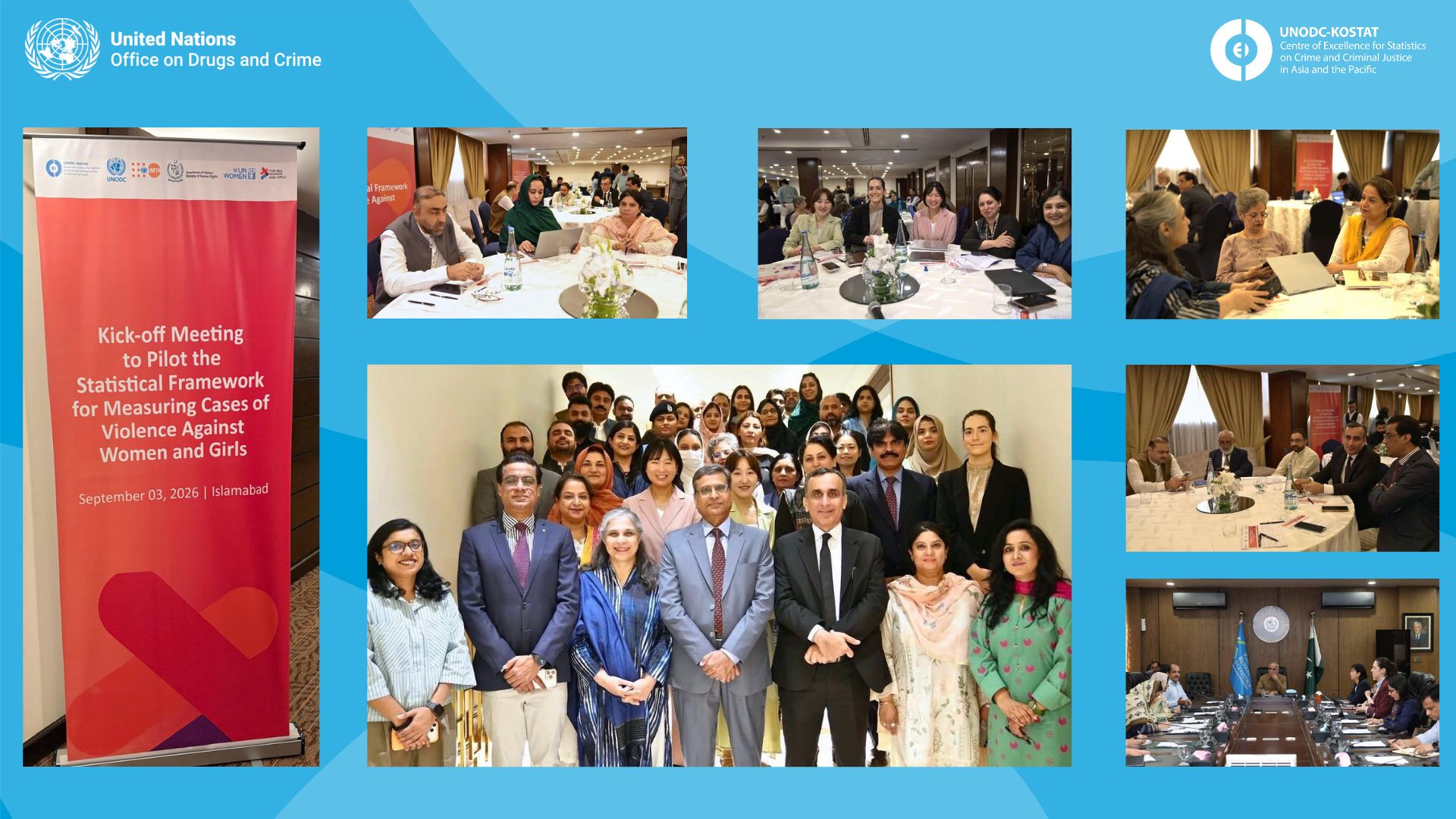
A five-day mission in Pakistan began with an inter-agency kick-off meeting convened with the Ministry of Human Rights. Representatives from government and criminal justice institutions, statistical authorities, judicial and forensic services, civil society and United Nations agencies discussed the current landscape of homicide and gender-related violence data in the country. The discussions highlighted the range of data collected by different institutions, while also pointing to differences in definitions, categories, reporting practices and data systems across institutions and provinces.
The mission subsequently examined how information is generated and used at different stages of the justice and statistical processes. Meetings with the Pakistan Bureau of Statistics and National Police Bureau focused on crime statistics, administrative data and efforts to strengthen standardization and digital reporting. Consultations with judicial and forensic institutions considered case tracking, medical-legal and forensic information, and the availability of variables relevant to understanding the circumstances of a killing. Discussions with the Ministry of Human Rights and the National Commission on the Status of Women also explored existing mechanisms for monitoring gender-based violence and coordinating information from different sources.
Civil society organizations and United Nations partners provided additional perspectives on data that may not be captured through official criminal justice records. Their experience highlighted the potential value of complementary sources, including helplines, civil society case records and surveys, while underscoring the importance of harmonizing indicators and definitions across data producers.
The visit to the country provided an opportunity to identify practical entry points for applying the Statistical Framework within Pakistan’s existing systems. Rather than establishing a parallel data collection mechanism, the initiative will build on existing national sources and institutional capacities to assess where relevant information is already available, where gaps remain, and how data can be better aligned for statistical purposes.