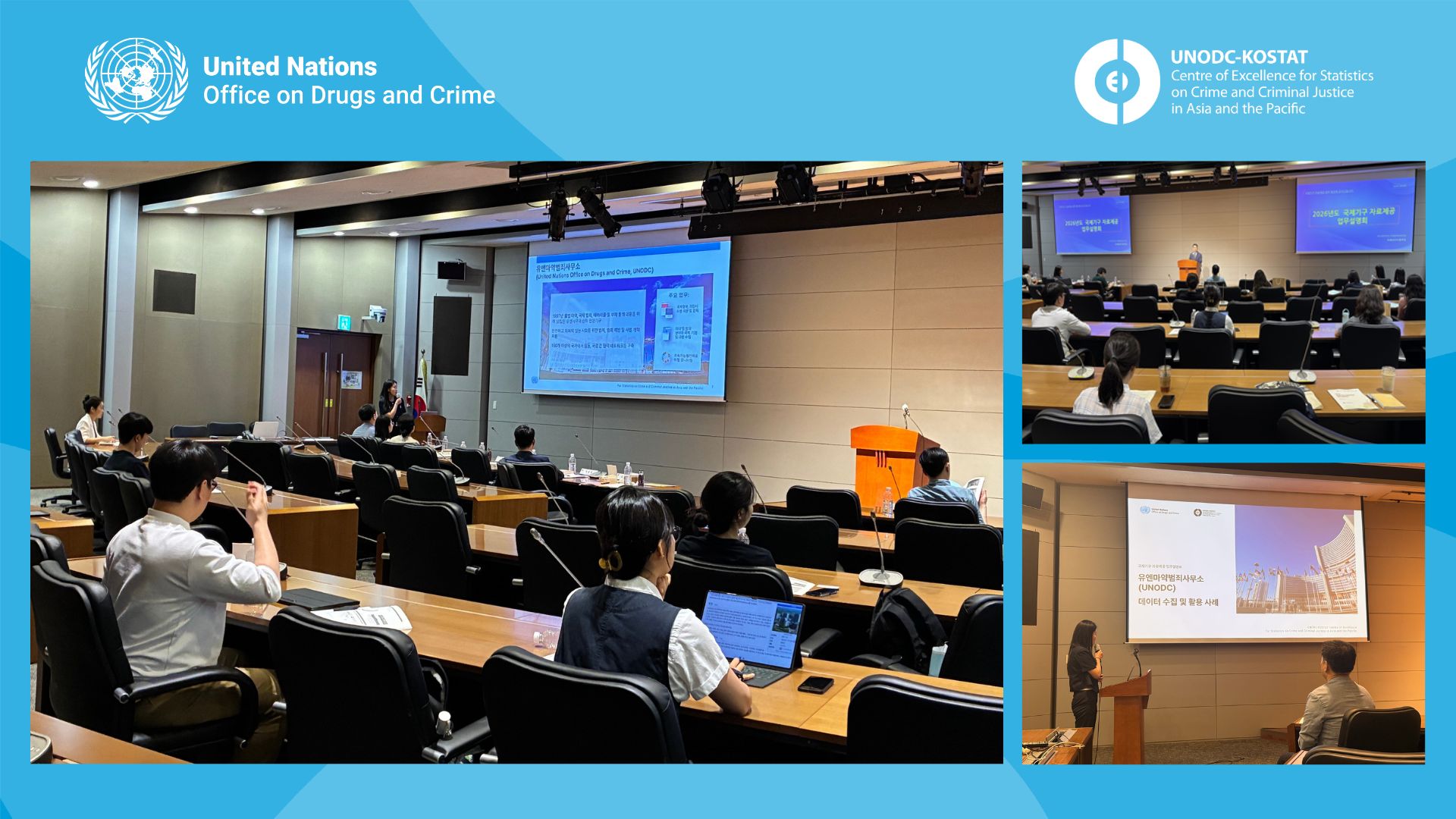
Daejeon (Republic of Korea), 15 July 2026– The UNODC–KOSTAT Centre of Excellence for Statistics on Crime and Criminal Justice in Asia and the Pacific (CoE) delivered a presentation at the Briefing Session on Data Provision to International Organizations, hosted by the International Cooperation Division of the Ministry of Data and Statistics (MODS). Held at the Data and Statistics Human Resources Development Institute in Daejeon, the event brought together 35 data management officials from central government ministries and public institutions. The briefing aimed to streamline the submission of national data to international organizations and strengthen the national framework for monitoring data provision.
The first session, led by MODS’s International Cooperation Division, opened with an overview of the relevant legal requirements and national data management system. A key feature was a live demonstration of the Korea Data Provision System (KODAPS), including step-by-step guidance on completing the comprehensive management ledger used to track international data requests, calculate data provision rates and monitor data utilization. The session also emphasized the importance of close inter-agency cooperation.
The briefing then featured presentations illustrating how national statistics are used internationally. Eun Hee Chung, Partnership Specialist at the FAO Partnership and Liaison Office in the Republic of Korea, presented the global SDG indicator framework and recent monitoring trends. Jiae Park, Statistical Officer at the CoE, provided an overview of UNODC and its mandate in crime and criminal justice statistics. She also introduced UNODC’s global data collection activities with the focus on the United Nations Survey of Crime Trends and Operations of Criminal Justice Systems (UN-CTS), through which UNODC annually collects data from Member States on crime and the operation of criminal justice systems. The presentation also highlighted key uses of UN-CTS data, including monitoring crime trends and SDG indicators and supporting academic research, while also outlining the CoE’s role in supporting Member States with data submissions and the implementation of international statistical standards.
The briefing helped strengthen coordination among national data providers and highlighted their essential role in producing consistent, timely and internationally comparable statistics. The CoE will continue collaborating with the Ministry of Data and Statistics and relevant national institutions to improve the quality and comparability of crime and criminal justice statistics.
Daejeon (Republic of Korea), 15 April 2026 – Representatives of MODS’s International Cooperation Division visited the CoE in Daejeon, accompanied by four youth interns. The visit introduced the interns to the CoE’s mandate and activities across Asia and the Pacific and provided insights into the work of the United Nations and related career paths. The interns actively engaged throughout the session, asking questions and sharing their thoughts during the discussion. The session also illustrated how the CoE’s work on crime and criminal justice statistics contributes to broader international development priorities, including the monitoring of the Sustainable Development Goals (SDGs), particularly SDG 16 on peace, justice and strong institutions.
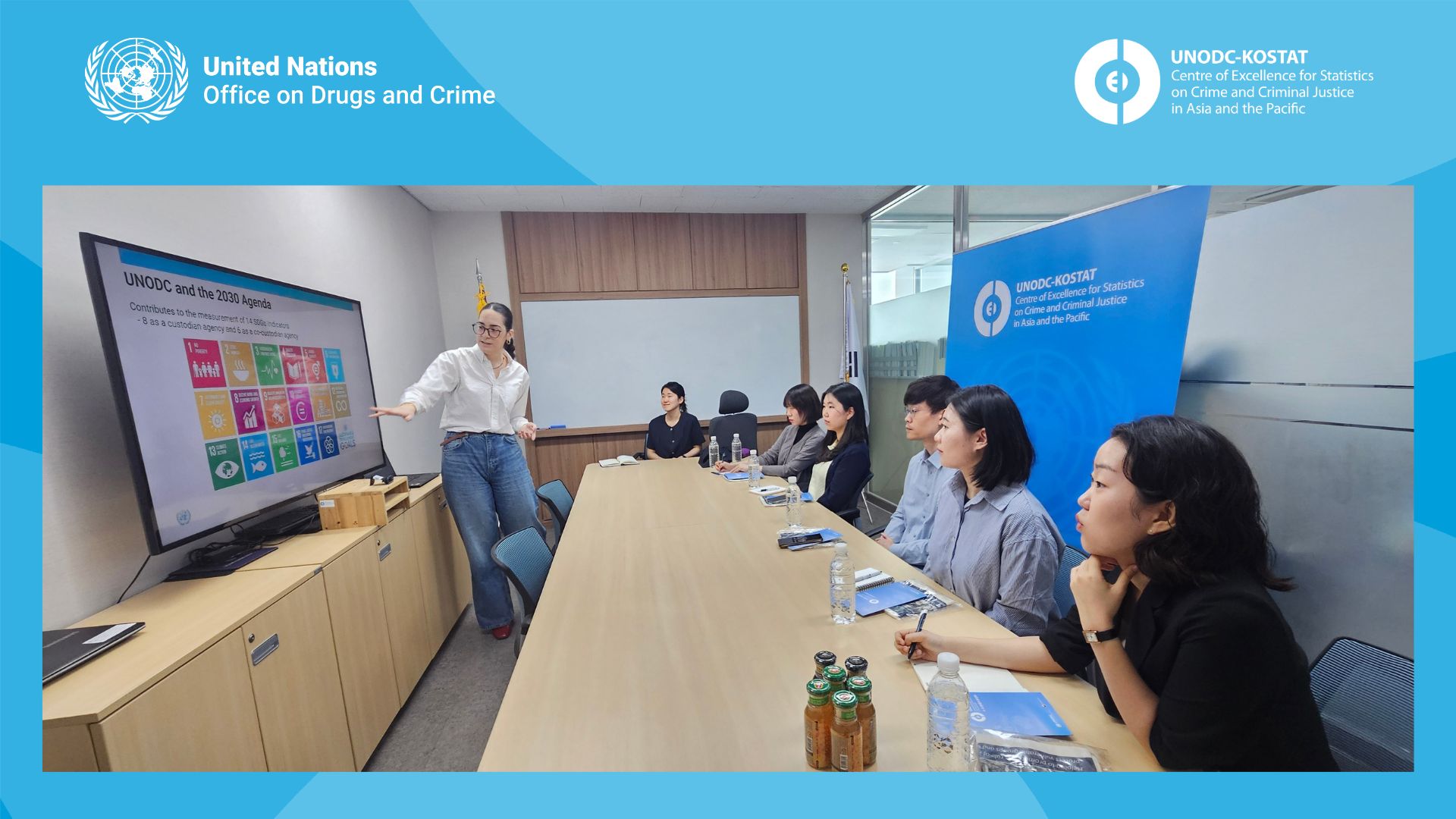
The visit also provided an opportunity for the CoE and MODS’s International Cooperation Division to explore potential areas of cooperation. Discussions highlighted the shared importance of strengthening the production, provision and use of internationally comparable statistics and laid the groundwork for continued collaboration on statistics-related activities.